Approach
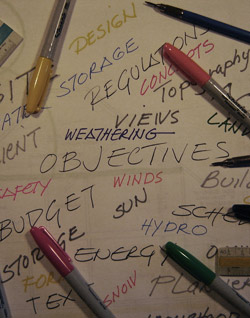
Every project has its own unique client objectives and preferences, site, budget, regulatory context, physical/technical opportunities and constraints, and other issues. Bob’s approach to the work is fitted to each individual project.
Typically Bob first discusses with the client their objectives, specific requirements and preferences in detail (including project budget) in order to have a clear picture of what is to be achieved. Thereafter, analysis of the multiple relevant existing conditions (site, geology, landscape character, zoning and others) creates a framework within which options can be assessed. Early input from other consultants including a local builder is obtained as appropriate.
The design process is one of considered trial and error where clients respond to sketch ideas and working models. An important part of the process is to consider how current needs will evolve over time. Changes in occupants (growing family, children returning home, guest and in-laws accommodation, etc.), needs for being able to age in place (living on one level, future lift, etc.), and opportunities for a suite or future infill/guest cabin (family, help, rental) may be considered. Space for hobbies and to accommodate pets are discussed.
The balance between maximizing space versus using higher quality materials/systems is reviewed. Issues of appropriate size (best described by the Swedish word “lagom” meaning “ sufficient, just right, just large enough”) is also a topic discussed as the design ideas develop.
Clients must appreciate that the design process does require a substantial time commitment on their part to work through the issues, ideas and choices which are part of creating a new home, cabin, renovation or other project.
Click Here to return to main page.